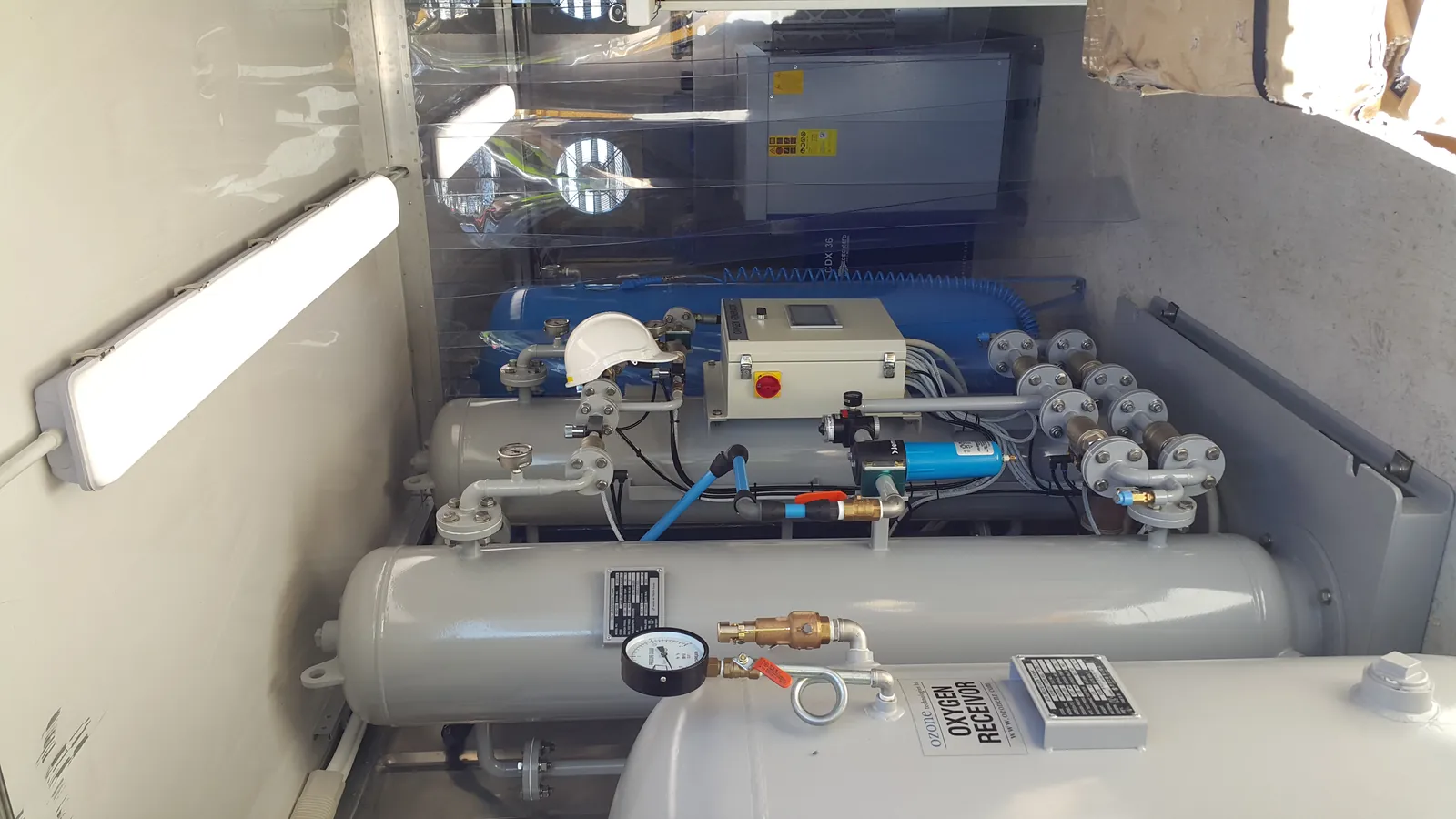
- What is a PSA oxygen generator?
- PSA stands for Pressure Swing Adsorption. A PSA oxygen generator produces concentrated oxygen on-site from ambient air, using a pair of vessels filled with molecular-sieve material that selectively adsorbs nitrogen at higher pressure and releases it at lower pressure. The vessels cycle continuously, delivering a steady oxygen-rich stream — typically 93–95% O₂.
- Why do ozone generators use oxygen feed gas?
- Running an ozone generator on concentrated oxygen rather than ambient air dramatically increases efficiency: ozone output concentration rises from roughly 1–3 wt% (air-fed) to 8–14 wt% (oxygen-fed), and the energy cost per kilogram of ozone drops accordingly. Higher concentration also means a smaller contactor and less off-gas to manage.
- What oxygen purity is needed for ozone generation?
- Industrial ozone generators are designed to run on oxygen at about 90–95% purity, which is exactly what a well-sized PSA unit delivers. Gas dryness matters more than the last few percent of purity — incoming gas must be very dry (typically dewpoint below −60 °C) to protect the generator dielectrics.
- Is on-site oxygen cheaper than bottled oxygen?
- For continuous industrial use the answer is normally yes. On-site PSA removes the cost of trucked liquid oxygen or bottle hire / changeover, and removes the supply-risk that comes with depending on a delivery schedule. Payback depends on the size of the system and how much oxygen it uses — we can model it as part of the design phase.
- What maintenance does a PSA oxygen generator need?
- PSA is a proven low-maintenance technology. Typical service items are periodic inspection or top-up of the molecular-sieve material, routine valve servicing, replacement of inlet air filters, and checks on the compressor and dryer feeding the unit. Service is normally scheduled annually for continuous-duty systems.
- Can PSA oxygen generators support aquaculture or industrial processes?
- Yes. The same PSA technology that feeds an ozone generator can supply oxygen for direct oxygenation of recirculating aquaculture (RAS) and hatchery water, or for industrial processes that need a steady oxygen supply. See our aquaculture page for ozone + oxygen integration in fish systems.